Informationen für Wissenschaftler
Informationen für Wissenschaftler*innen
-
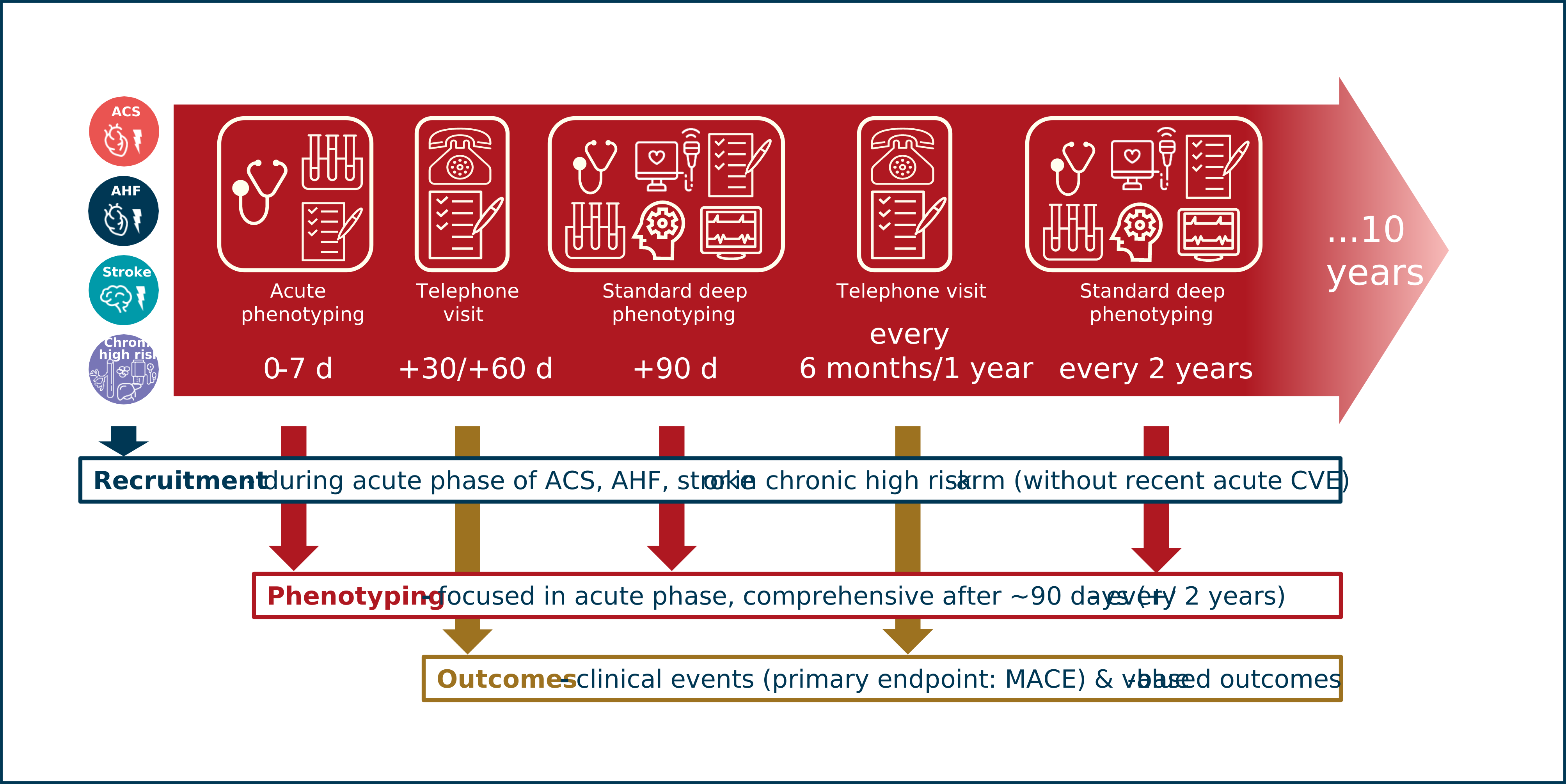
Studiendesign
-
Daten- und Probennutzung (Use & Access)
Es ist Anliegen der BeLOVE-Studie, aus dem gesammelten Daten- und Probenmaterial den größtmöglichen Nutzen für die gesundheitsbezogene Forschung zu erzielen. Dies setzt eine breite Verfügbarkeit der Daten und des Probenmaterials für interne und externe Wissenschaftler*innen voraus. Auf Grund der besonderen Anforderungen zum Schutz der Teilnehmendenrechte und des hohen wissenschaftlichen Werts des vorhandenen Daten- und Probenmaterials sind geplante Zugriffe hierauf besonders streng hinsichtlich der Ziele und des erreichbaren Nutzens abzuwägen.
Die Datennutzung mit Publikationsrechten und die Nutzung von Probenmaterial bedürfen grundsätzlich der Bewertung des Use & Access Committees der BeLOVE-Studie sowie der finalen Entscheidung durch das BeLOVE Executive Board. Der Antrag auf Genehmigung erfolgt über ein elektronisches Antragsverfahren (REDCap-basiert) entsprechend der aktuellen Nutzungsordnung.
Es gibt außerdem die Möglichkeit zur Datennutzung über unseren “Annual Export” ohne Publikationsrechte. Der Zugriff ist möglich nach Einwilligung in eine kurze Nutzungsvereinbarung. Fragen zur Daten- und Studienstruktur können in einer wöchentlichen Sprechstunde geklärt werden (Buchung über Open Iris). Für Publikationsrechte, den Zugriff auf Bilddaten oder die Nutzung von Probenmaterial muss weiterhin die Bewertung und Bewilligung durch das Use & Access Commitee erfolgen.
Zur Beantragung der Nutzung von Daten und/oder Probenmaterial aus der BeLOVE Studie kontaktieren Sie uns gerne unter einer der folgenden E-Mail Adressen:
-
Publikationen
Publikationen in Fachjournalen:
Nolte CH, Weber JE, Ahmadi M, Boldt L, Braemswig TB, Damm F, et al. Stroke and its consequences: protocol and pilot data of the observational Berlin Long-term Observation of Vascular Events (BeLOVE) stroke stratum. BMJ Neurology Open. 2026;8:e001727. https://doi.org/10.1136/bmjno-2026-001727
Temuulen U, Mekle R, Galinovic I, Weber JE, Landmesser U, Kelle S, Endres M, Stehning C, Villringer K; BeLOVE Study Group. Effect of vascular lesion preprocessing on Brain Intensity AbNormality Classification Algorithm (BIANCA) white matter hyperintensity segmentation. Neuroimage Clin. 2026 May 11;50:104001. doi: 10.1016/j.nicl.2026.104001. Epub ahead of print. PMID: 42119523.
Koprulu M, Smith-Byrne K, Ferolito BR, Macdonald-Dunlop E, Luan J, Hedman ÅK, Ogamba CF, Kuliesius J, Repetto L, Ramisch A, Abbasi F, Ärnlöv J, Assimes TL; BeLOVE Study Group; Björck HM, Björkander S, Böttcher M, Butterworth AS, Chen Z, Cho K, Clarke RJ, Cox SR, Czene K, Danesh J, Dedoussis G, Elmståhl S, Eriksson N, Eriksson P, Esko T; Estonian Biobank Research Team; Ferreiro-Iglesias A, Franks PW, Fu J, Gaziano JM, Ghanbari M, Gieger C, Gilly A, Grallert H, Gunter MJ, Gustafsson S, Göteson A, Hall PFL, Hansson O, Harris SE, Hayward C, Herder C, Hernandez-Pacheco N, Hijazi Z, Hillary RF, Hopewell JC, Hu S, Hwang SJ, Jern C, Johansson Å, Jonsson L, Kalnapenkis A, Kerrison ND, Kho PF, Klaric L, Kohleick L, Kraft J, Landén M, Levy D, Li L, Lind L, Long J, Mattsson-Carlgren N, Melén E, Merid SK, Mertins P, Michaëlsson K, Møller PL, Murgia F, Nyegaard M, Park YC, Pearson E, Peters J, Petrie JR, Png G, Polašek O, Prins BP, Ripke S, Roden M, Rohde PD, Said S; SCALLOP Consortium; Shen X, Schwenk JM, Siegbahn A, Smith JG, Stanne TM, Suhre K, Sundström J, Thorand B, Valdes-Marquez E, Vallerga CL, van Meurs JBJ, Viñuela A, Võsa U, Wallentin L, Walters RG, Wareham NJ, Weber JE, Weersma RK, Wilson JF, Winther S, Yasmeen S, Zanetti D, Zeggini E, Zhao JH, Zhernakova A, Zhernakova DV, Ziehm M, Kessler BM, Pereira AC, Mälarstig A, Pietzner M, Langenberg C. Multi-cohort proteogenomic analyses reveal genetic effects across the proteome and diseasome. Cell. 2026 May 6:S0092-8674(26)00385-5. doi: 10.1016/j.cell.2026.03.049. Epub ahead of print. PMID: 42097137.
Baum L, Müller A, Johns M et al. An interactive dashboard for analyzing user interaction patterns in the i2b2 clinical data warehouse. BMC Med Inform Decis Mak 24, 333 (2024). https://doi.org/10.1186/s12911-024-02748-0
Liegl G, Fischer FH, Martin CN et al. Converting PROMIS®-29 v2.0 profile data to SF-36 physical and mental component summary scores in patients with cardiovascular disorders. Health Qual Life Outcomes 22, 64 (2024). https://doi.org/10.1186/s12955-024-02277-4
Weber JE, Ahmadi M, Boldt L, et al. Protocol of the Berlin Long-term Observation of Vascular Events (BeLOVE): a prospective cohort study with deep phenotyping and long-term follow up of cardiovascular high-risk patients. BMJ Open 2023;13:e076415. doi: 10.1136/bmjopen-2023-076415
Arends CM, Liman TG, Strzelecka PM, Kufner A, Löwe P, Huo S, Stein CM, Piper SK, Tilgner M, Sperber PS, Dimitriou S, Heuschmann P, Hablesreiter R, Harms C, Bullinger L, Weber JE, Endres M, Damm F. Associations of clonal haematopoiesis with recurrent vascular events and death in patients with incident ischemic stroke. Blood 2023; 141 (7): 787–799. doi: https://doi.org/10.1182/blood.2022017661
Konferenzbeiträge:
Ruhm L, Purfuerst L, Ahmadi M, Ehret J, Rönnefarth M, Meyer-Eschenbach F, Schönrath K, Rudolph S, Weber JE, von Kalle C., Nothacker J., BeLOVE Study Group. (2026) OMOP Extraction of Medical Text Using LLMs: Preliminary Results. MIE 2026, Genova, Italy
Lishkova G, Schweizerhof O, Großmann J, von Rohr K, Landmesser U, Edelmann F, Eckardt KU, Endres M, Weber J, Pischon T, Schulz-Menger J, Müller D, Spranger J, Li L, Mai K. (2026) Impact of acute cardiovascular diseases and glucose metabolism on meal‑induced changes of cardiometabolic peptides. DDG Congress, Berlin, Germany [Poster P02.04]
Ali HF, Klammer M, Leutritz T, Mekle R, Dell'Orco A, Stehning C, Hetzer S, Weber JE, Ahmadi M, Piper SK, Schönrath K, Rohrpasser-Napierkowski I, Weiskopf N, Schulz-Menger J, Hennemuth A, Endres M, Villringer K. (2026) Microstructural Alterations of Normal Appearing White Matter Assessed by Quantitative Multiparametric Mapping. ISMRM 2026, Cape Town, South Africa [Poster 369-03-004]
Laube A, Stehning C, Weber JE, Endres M, Schönrath K, Rohrpasser-Napierkowski I, Leutritz T, Weiskopf N, Schulz-Menger J, Villringer K, Hennemuth A. (2026) Unsupervised Image Harmonization of Quantitative Multiparametric Maps of the Brain. ISMRM 2026, Cape Town, South Africa [Poster 561-01-009]
Huebotter CS, Temuulen U, Weber JE, Schönrath K, Rohrpasser-Napierkowski I, Tuncer M, Endres M, Galinovic I, Villringer K. (2026) Automated white matter hyperintensity segmentation: Thesholded BIANCA vs TRUE-NET. ESOC 2026, Maastricht, NL [Poster ESOC2026A1381]
May E, Witte V, Schönrath K, Endres M, Weber J, Villringer K, Sacher* J, Khalil* A, on behalf of the BeLOVE Study Group. (2026) Sex and Menopause Effects on Brain Perfusion in Individuals with High Vascular Risk. MBB Symposium, Berlin, Germany [Poster A17]
Ali HF, Leutritz T, Weber J, Mekle R, Hetzer S, Dell'Orco A, Stehning C, Ahmadi M, Kollmus-Heege J, Piper S, Rattan S, Schweizerhofer O, Schönrath K, Rohrpasser-Napierkowski I, Weiskopf N, Fiebach JB, Schulz-Menger J, Hennemuth A, Endres M, Villringer K. (2025) Microstructural Alterations of Normal Appearing White Matter assessed by Multiparametric Mapping. DGNR 2025, Salzburg [Talk, Abstractnr. 249]
Ali HF, Leutritz T, Weber J, Mekle R, Hetzer S, Dell'Orco A, Stehning C, Ahmadi M, Kollmus-Heege J, Piper S, Rattan S, Schweizerhofer O, Schönrath K, Rohrpasser-Napierkowski I, Weiskopf N, Fiebach JB, Schulz-Menger J, Hennemuth A, Endres M, Villringer K. (2025) Microstructural alterations in white matter hyperintensities and surrounding normal-appearing white matter: Insights gained from multiparametric mapping. ESOC 2025, Helsinki, Finnland [Poster, P317]
Dogan D.Y., Weber J., Endres M., Ahmadi M., Otte C. (2025) Identifying potential predictors of depressive symptoms post-acute vascular event: insights from the berlin long-term observation of vascular events (BeLOVE). ECNP 2025, Amsterdam, Netherlands [Poster, PS03-2119]
Chitroceanu AM, Fahjen P, Schulze D, Zach V, Alasfar L, Dahmen JN, Beyer RE, Zurkan D, Plappert C, Weber JE, Mertins P, Edelmann F, on behalf of the Belove-Study Group. (2024) Plasma proteomics in acute heart failure - a step towards a mechanistic understanding of the disease. ESC, Heart Failure 2024, Lisbon. [ePoster]
May E, Witte V, Schönrath K, Endres M, Weber JE, Villringer K, Khalil* A, Sacher* J, on behalf of the BeLOVE Study Group. (2024) Exploring Sex Differences and Menopause in Brain Perfusion and Mild Cognitive Impairment in Patients with Vascular Risk. CAMH womenmind conference 2024, Toronto. [Poster, program p.21]
Villringer K*, Uchralt T*, Simon-Batsford N, Landmesser U, Kelle S, Fiebach JB, Weber J, Endres M: on behalf of the BeLOVE Study Group. (2023) Assessment of BIANCA WMH quantification performance
before and after lesion removal. Brain & Brain PET 2023, 31st International Symposium on Cerebral Blood Flow and Metabolism. [Poster 34, 13 June]Braemswig TB, Villringer K, Riegler C, Ahmadi M, Leistner DM, Mai K, Spranger J, Landmesser U, Weber JE, Endres M, Nolte CH. Prevalence of cerebral microbleeds in different vascular risk cohorts: Observations from the Berlin Long-Term Observational Study of Vascular Events (BeLOVE). 9th European Stroke Organisation Conference, 2023. [Poster ID P1383]
Blaszczyk E, Gröschel J, Viezzer D, Saad H, Endres M, Landmesser U, Pieske B, Spranger J, Weber JE, Schulz-Menger J, on hehalf of the Belove-Study Group. (2023) Deep cardiac phenotyping by CMR after different acute cardiovascular events – assessment of unknown myocardial injury - insights from the BeLOVE (Berlin Longterm Observation of Vascular Events) study. SCMR 26th Annual Scientific Sessions, San Diego, California USA.
Braemswig TB, Villringer K, Riegler C, Ahmadi M, Leistner DM, Mai K, Spranger J, Landmesser U, Weber JE, Endres M, Nolte CH. (2022) Prävalenz zerebraler Mikroblutungen in unterschiedlichen vaskulären Risiko-Kohorten: Erste Beobachtungen aus der Berliner Langzeitbeobachtungsstudie für vaskuläre Ereignisse (BeLOVE). DNG - Neurowoche 2022, Berlin, Germany. [Poster DGN-P145]
Fischer F, Schmidt S, Rose M. (2022) Comparison of PROMIS Depression CATs based on US calibration with a German calibration. 8th Conference of the International Association for Computerized Adaptive Testing, Frankfurt am Main, Germany. [Talk]
Meteva D, Gerhardt T, Schweizerhof O, Aigner A, Piper S, Kollmus-Heege J, Last J, Schatz A-S, Seppelt C, Abdelwahed Y, Juri B, Kränkel N, Müller D, Nolte C, Endres M, Landmesser U, Weber J, Leistner D, on behalf of the BeLOVE study group. (2022) Immunophenotyping for Cardiovascular Risk Stratification in Acute Coronary Syndrome vs. Acute Ischemic Stroke- results from the multicenter prospective BeLOVE cohort study. 88. Jahrestagung der Deutschen Gesellschaft für Kardiologie – Herz- und Kreislaufforschung e.V., Mannheim, Germany. Clin Res Cardiol 111, 592.
Cipriani A, Blaszczyk E, Weber J, Schulz-Menger J. (2019) Subclinical myocardial injury in cardiovascular high-risk patients after acute event: insights from the BeLove pilot study. SCMR 22nd Annual Scientific Sessions, Bellevue, WA USA. [Poster-P008]
-
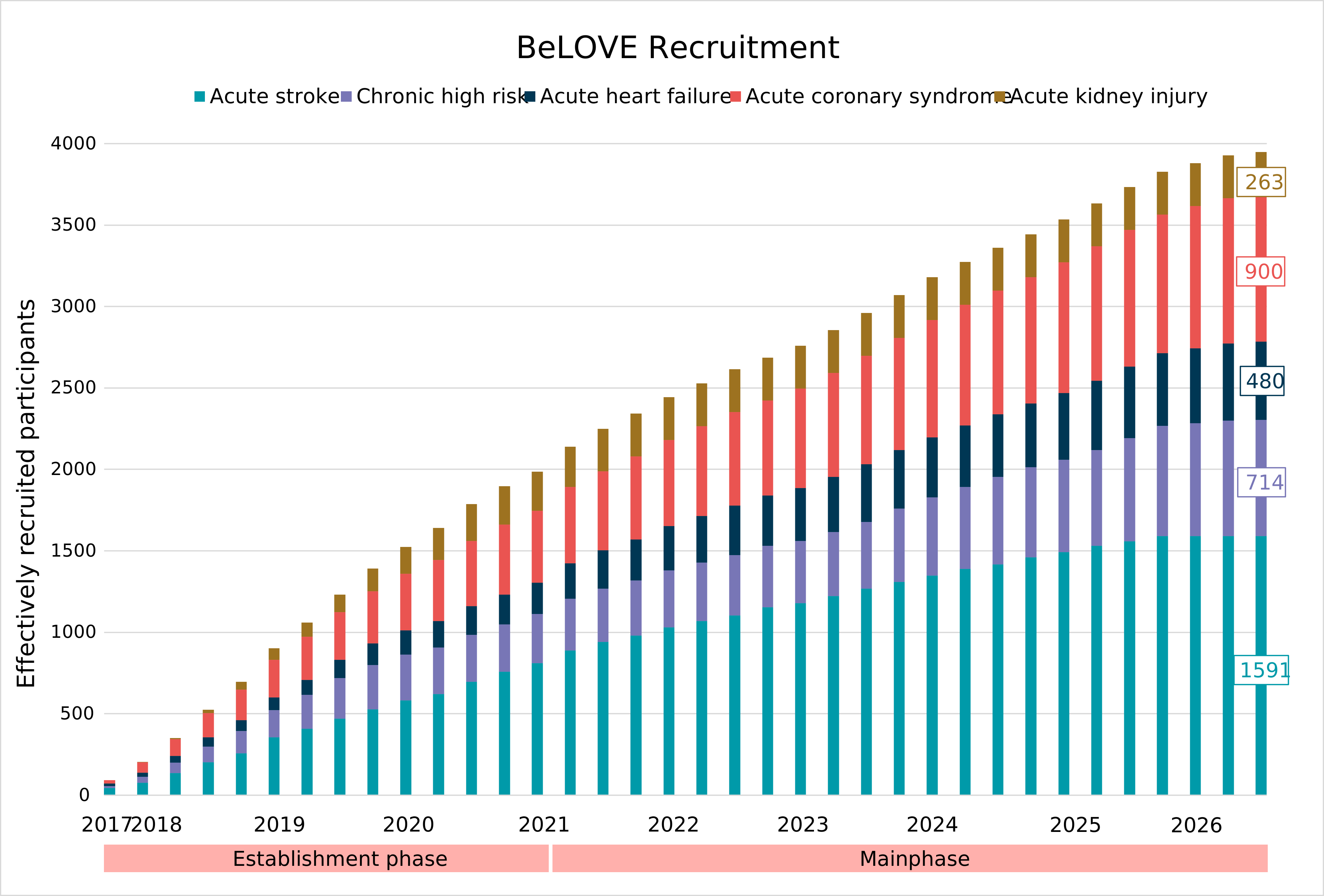
BeLOVE Effektive Rekrutierung
-
BeLOVE Boards und Komitees
BeLOVE Executive Board
Die strategische Ausrichtung der BeLOVE-Studie wird durch die Mitglieder des Executive Board festgelegt. Das Executive Board setzt sich aus den hauptverantwortlichen Expert*innen, klinischen Vertreter*innen, Epidemiolog*innen sowie der Gastrolle der Leitung des BIH/Charité Clinical Study Centers zusammen und übernimmt die Hauptverantwortung der Studie. Als nicht stimmberechtigtes Mitglied unterstützt der BeLOVE Scientific Officer das Executive Board Gremium. Mit der rotierenden Sprecherschaft aus den Reihen der klinischen Principal Investigators werden die Interessen federführend und in einer klaren Führungsrolle in- und extern vertreten. Die ebenfalls führungsverantwortliche Funktion des stellvertretenden Sprechers, gewählt aus den Reihen des Executive Boards, sichert für die Laufzeit der Studie das epidemiologische Fundament der Kohortenstudie.BeLOVE Scientific Board
Das wissenschaftliche Fundament der BeLOVE Studie bilden Expert*innen und klinischen Vertreter*innen, Leiter*innen der wichtigsten Phänotypisierungsmodule, Epidemiolog*innen und Biostatistiker*innen des BeLOVE Scientific Boards.BeLOVE Use & Access Committee
Das Use & Access Committe setzt sich zusammen aus jeweils einem/er Vertreter*in der für die in BeLOVE rekrutierten Krankheitsentitäten verantwortlichen Kliniken, leitenden Epidemiologen*in in BelOVE, leitenden Biometriker*in in BeLOVE, Vertreter*in der an BeLOVE beteiligten grundlagenwissenschaftlichen Arbeitsgruppen, sowie dem Scientific Officer der BeLOVE-Studie. Das Use & Access Committee prüft eingehende Nutzungsanträge entsprechend der Nutzungsordnung von BeLOVE nach festgelegten Kriterien und gibt eine Empfehlung zur Bewilligung, Modifikation oder Ablehnung an das BeLOVE Executive Board ab. Das BeLOVE Executive Board bestätigt oder modifiziert diese Empfehlung. Bewertet das Executive Board den Antrag diskrepant zum Use & Access Committee, wird das Scientific Board zur finalen Entscheidungsfindung angehört. Die finale Entscheidung über die Genehmigung eines Antrags liegt abschließend beim BeLOVE Executive Board. -
Management Teams
Die Verarbeitung und Zurverfügungstellung der im Rahmen der BeLOVE Studie vom Studienteam gesammelten Daten und Proben wird von verschiedenen Teams realisiert:
Biostatistik Team
Datenmanagement Team
Bewilligte Projekte
| Project titel | Project lead | Main affiliations | Year of approval |
|---|---|---|---|
| Quantifying and Addressing Misclassification in Real-Life Data. | Ulrike Grittner | Charité - Universitätsmedizin Berlin Berlin Institute of Health at Charité (BIH) | 2026 |
| Quality management of optical coherence tomography - angiography and application of enhanced retinal vascular imaging analysis in the Berlin Longterm Observation of Vascular Events (BeLOVE) study. | Frederike Cosima Oertel | Charité - Universitätsmedizin Berlin | 2026 |
| Comprehensive metabolic and metaproteomic phenotyping for risk prediction in BeLOVE | Ulf Landmesser | Deutsches Herzzentrum der Charité (DHZC) | 2026 |
| BeLOVE BrainAge - How cardiometabolic disease ages the brain - and what that means for heart, mind and life. | Knut Mai | Charité - Universitätsmedizin Berlin | 2026 |
| TERASTROKE - Next generation stroke genomics | Matthias Endres | Charité - Universitätsmedizin Berlin | 2026 |
| Metabolic flexibility and associated inflammatory phenotyping across cardiometabolic conditions in BeLOVE | Knut Mai | Charité - Universitätsmedizin Berlin | 2026 |
| Central Stress Circuits Mediate Cardiac Damage After Ischemic Stroke | Matthias Endres | Charité - Universitätsmedizin Berlin | 2025 |
| Anti-NMDA-receptor antibodies target the same epitope as tissue plasminogen activator (tPA) | Matthias Endres, Denis Vivien | Charité - Universitätsmedizin Berlin CHU Caen Normandie | 2025 |
| BeLOVE as a resource for developing a software service using LLMs and NLPs to analyze full-text documents and convert them into the FHIR standard medical data format | Alexander Bartschke, Sylvia Thun | Berlin Institute of Health at Charité (BIH) | 2025 |
| Renal Dysfunction in Acute Heart Failure: Stratification, Cardiorenal Interaction, and Early Dynamic Changes - Insights from the BeLOVE Observational Cohort Study | Frank Edelmann | Deutsches Herzzentrum der Charité (DHZC) | 2025 |
| Common and specific predictors of depressive symptoms three months after an acute cardiovascular event: data from the Berlin Longterm Observation of Vascular Events (BELOVE) | Christian Otte | Charité - Universitätsmedizin Berlin | 2025 |
| Glucose variability and primary outcome 90 d after acute event | Knut Mai | Charité - Universitätsmedizin Berlin | 2025 |
| Devising a personalized risk stratification and holistic management for prevention of cognitive decline in patients with different cardiovascular phenotypes: the DORIAN-GRAY project | Ivana Galinovic | Charité - Universitätsmedizin Berlin | 2025 |
| A Digital Twin Approach to Predicting Cognitive Trajectories After Stroke Using MRI-Derived Brain Health Biomarkers | Ida Rangus | Charité - Universitätsmedizin Berlin | 2025 |
| BeLOVE DIAOMICS: Omics data signatures of type 2 diabetes clusters in BeLOVE cohorts and their prediction of diabetes-related endpoints | Knut Mai, Janine Wiebach | Charité - Universitätsmedizin Berlin Berlin Institute of Health at Charité (BIH) | 2025 |
| LLM-Supported Structuring of Clinical Letters for Model Evaluation and Secondary Use | Johanna Nothacker | Berlin Institute of Health at Charité (BIH) | 2025 |
| Lipoproteinemia in Patients of the Berlin Observation of Long-Term Events (BeLOVE) Cohort | Alexander Nave | Charité - Universitätsmedizin Berlin | 2025 |
| Using bridging blood samples from BeLOVE to allow comparability of results from OLINK 96 analyses based on BeLOVE and PoC-Study cohorts | Tobias Pischon | Max-Delbrück-Center for Molecular Medicine (MDC) Charité - Universitätsmedizin Berlin | 2025 |
| STROKE-PAIN: Central Neuropathic Pain Following Stroke: Lesions, Connectivity, and Biomarkers for Pain Prognosis and Treatment Response | Matthias Endres | Charité - Universitätsmedizin Berlin | 2024 |
| Implementation of deep learning model in poor-quality echocardiogram images: Resolution enhancement to optimize quantitative assessment of the ejection fraction | Frank Edelmann | Deutsches Herzzentrum der Charité (DHZC) | 2024 |
| Strain in patients with HFpEF and healthy controls from the InFlame study | Dominik Müller | Max-Delbrück-Center for Molecular Medicine (MDC) | 2024 |
| Patient-Reported Outcome Measures (PROMs) in patients with stroke | Matthias Endres | Charité - Universitätsmedizin Berlin | 2024 |
| Analysis of cognitive impairments following thalamic stroke | Matthias Endres | Charité - Universitätsmedizin Berlin | 2024 |
| Trajectories of cognitive function after stroke and frequency of post stroke cognitive impairment and recovery in the BeLOVE cohort | Thomas Liman, Matthias Endres | Carl von Ossietzky Universität Oldenburg Charité - Universitätsmedizin Berlin | 2024 |
| Automated Segmentation of Perivascular Spaces: Assessment and Validation | Kersten Villringer, Jose Bernal Moyano | Charité - Universitätsmedizin Berlin Friedrich-Alexander-Universität Erlangen-Nürnberg | 2024 |
| PAR2 inhibition reduces complement-associated cardiac remodelling in obesity-related HF | Ursula Rauch-Kröhnert | Deutsches Herzzentrum der Charité (DHZC) | 2024 |
| Investigating brain network interaction across behavioral domains to guide therapeutic stimulation for gait | Matthias Endres | Charité - Universitätsmedizin Berlin | 2024 |
| Microbleed counts and markers of cerebral small vessel disease (SVD) in patients with and without congential haemostasis defects (Supporting project as part of the ERANET NEURON funded COHDICH Project: Consequences of Haemostatic Defects after Intracerebral haemorrahge). | Matthias Endres | Charité - Universitätsmedizin Berlin | 2024 |
| Reliability of BIANCA quantification of WMH: a longitudinal observation of the BELOVE study | Kersten Villringer | Charité - Universitätsmedizin Berlin | 2024 |
| Cardiac blood biomarkers in acute ischemic stroke | Jan Scheitz | Charité - Universitätsmedizin Berlin | 2024 |
| Analysis of clonal haematopoiesis's impact on proteomic landscape in BeLOVE patients: a part of in depth characterisation of clonal haematopoiesis as a risk factor for cardiovascular diseases | Frederik Damm | Charité - Universitätsmedizin Berlin | 2024 |
| Using bridging blood samples from BeLOVE to allow comparability of results from OLINK 96 inflammatory biomarker analyses based on NAKO, BeLOVE and KTX360° cohorts | Tobias Pischon | Max-Delbrück-Center for Molecular Medicine (MDC) Charité - Universitätsmedizin Berlin | 2024 |
| Using RNA-profiling to investigate brain-heart interaction | Jan Scheitz | Charité - Universitätsmedizin Berlin | 2024 |
| Impaired glucose metabolism in the BeLOVE cohort | Alexander Nave | Charité - Universitätsmedizin Berlin | 2024 |
| Short-term mortality in patients with acute heart failure across ejection fraction: Insights from the BeLOVE cohort study at Charité Berlin | Frank Edelmann | Deutsches Herzzentrum der Charité (DHZC) | 2024 |
| Protease activated receptor 2 autoantibodies impact functional outcome in the long-term after stroke - a validation study | Matthias Endres | Charité - Universitätsmedizin Berlin | 2024 |
| Exploring Sex Differences and Menopause in Brain Perfusion and Mild Cognitive Impairment in Patients with Vascular Risk | Veronica Witte, Julia Sacher, Kersten Villringer | Universität Leipzig Charité - Universitätsmedizin Berlin | 2024 |
| Deep plasma proteomic analysis of patients with HFpEF and HFrEF | Philipp Mertins, Frank Edelmann | Berlin Institute of Health at Charité (BIH) Max-Delbrück-Center for Molecular Medicine (MDC) Deutsches Herzzentrum der Charité (DHZC) | 2024 |
| Elucidating neutrophil's role in ventricular arrhythmia | Ulf Landmesser | Deutsches Herzzentrum der Charité (DHZC) | 2023 |
| Anti-PF-4-induced thrombopenia in cerebro- and cardiovascular disease | Andreas Greinacher, Matthias Endres | Universitätsmedizin Greifswald Charité - Universitätsmedizin Berlin | 2023 |
| Cardiovascular phenotype in heart failure with preserved ejection fraction (HFpEF): Structural and molecular patterns | Frank Edelmann | Deutsches Herzzentrum der Charité (DHZC) | 2023 |
| Unravelling shared and non-shared inflammatory signatures for major adverse cardiovascular events (MACE) and/or mortality in high cardiovascular risk patients (BeLOVE cohort) with OLINK inflammatory biomarkers | Tobias Pischon | Max-Delbrück-Center for Molecular Medicine (MDC) Charité - Universitätsmedizin Berlin | 2023 |
| Contrasting proteomic profiles of NMDAR antibody seropositive and seronegative stroke patients | Matthias Endres | Charité - Universitätsmedizin Berlin | 2023 |
| The fully automated echo core lab: an algorithm for vendor-independend automated assessment of cardiac structure, systolic and diastolic function | Martin Kropf | Charité - Universitätsmedizin Berlin | 2023 |
| Best practice example of model building in cardiology - BeLOVE | Georg Heinze | Medizinische Universität Wien | 2023 |
| Normal appearing white matter microstructural changes assessed by quantitative multiparametric mapping: a BeLOVE- Study | Kersten Villringer | Charité - Universitätsmedizin Berlin | 2023 |
| Genome-wide association studies of cardiometabolic endpoints and risk factors in a cohort of patients with acute events | Claudia Langenberg, Maik Pietzner | Berlin Institute of Health at Charité (BIH) | 2023 |
| Clonal haematopoiesis as a risk factor for cardiovascular diseases: integrated single cell multi-omic characterization and clonal tracing in BeLOVE patients with clonal haematopoiesis | Frederik Damm | Charité - Universitätsmedizin Berlin | 2023 |
| Identification of Stroke Biomarkers based on -Omics Datasets of the BeLOVE Study | Matthias Endres | Charité - Universitätsmedizin Berlin | 2023 |
| Investigating the interaction between vascular risk factors and cerebral hemodynamics measured using resting-state functional MRI | Kersten Villringer | Charité - Universitätsmedizin Berlin | 2023 |
| Integration of BeLOVE into the SCALLOP consortium | Claudia Langenberg, Maik Pietzner | Berlin Institute of Health at Charité (BIH) | 2023 |
| Lesion-network mapping of post-stroke symptoms and long-term outcome | Matthias Endres | Charité - Universitätsmedizin Berlin | 2023 |
| Image-based personalized prediction of residual risk and prognosis of cardio/cerebrovascular disease | Kersten Villringer, Anja Hennemuth, Jeanette Schulz-Menger | Charité - Universitätsmedizin Berlin | 2022 |
| Glucose variability and abdominal adipose tissue | Knut Mai | Charité - Universitätsmedizin Berlin | 2022 |
| Machine learning-based prognosis: assessment of novel CMR features in a prospective patient cohort | Frank Edelmann | Deutsches Herzzentrum der Charité (DHZC) | 2022 |
| Proteomic pathways in acute heart failure – a step towards a mechanistic understanding of the disease and precision medicine | Philipp Mertins, Frank Edelmann | Berlin Institute of Health at Charité (BIH) Max-Delbrück-Center for Molecular Medicine (MDC) Deutsches Herzzentrum der Charité (DHZC) | 2022 |
| Einflussfaktoren auf die Lebensqualität bei Diabetes PatientInnen des Referenzarms der BeLOVE Studie | Matthias Rose | Charité - Universitätsmedizin Berlin | 2021 |
| Comparison of PROMIS Depression CATs based on US calibration with a German calibration | Gregor Liegl | Charité - Universitätsmedizin Berlin | 2021 |
| Autoantibodies against PAR2 and outcome after stroke - Structural and Functional Basis for Non-HLA Antibody Mediated PAR2 Activation in cerebral post-stroke angiogenesis | Matthias Endres | Charité - Universitätsmedizin Berlin | 2021 |
| Validation of the abdominal diameter as a predictor of abdominal fat | Knut Mai | Charité - Universitätsmedizin Berlin | 2020 |
| Risk of silent new ischemic lesions in patients treated with dual antiplatelet therapy after acute ischemic stroke or transient ischemic attack (TIA) | Tim Bastian Brämswig | Charité - Universitätsmedizin Berlin | 2019 |
| Cerebral microbleeds and risk for future cerebral hemorrhagic and ischemic events | Tim Bastian Brämswig | Charité - Universitätsmedizin Berlin | 2019 |
| Contribution of sex and gender (S&G) to disease phenotypes | Vera Regitz-Zagrosek | Charité - Universitätsmedizin Berlin | 2017 |
| Sex-specific differences of preclinical risk factors on grey/white matter volume and outcome in patients with cerebrovascular disease (CVD) | Kersten Villringer | Charité - Universitätsmedizin Berlin | 2017 |
| Non-invasive differentiation of myocardial structure applying Cardiovascular MRI | Jeanette Schulz-Menger | Charité - Universitätsmedizin Berlin | 2017 |
| Metabolic and cardiovascular post-challenge physiology predicts outcome | Knut Mai | Charité - Universitätsmedizin Berlin | 2017 |
| Environmental factors, metabolism and cardiovascular outcome in high risk patients. | Tobias Pischon | Max-Delbrück-Center for Molecular Medicine (MDC) Charité - Universitätsmedizin Berlin | 2017 |
| Immunophenotyping to assess incident cardiovascular risk | Dominik Müller | Max-Delbrück-Center for Molecular Medicine (MDC) Charité - Universitätsmedizin Berlin | 2017 |
| Genetic and epigenetic variability as risk factor for cardiovascular outcome and machine learning to aid data analysis and interpretation | Norbert Hübner | Max-Delbrück-Center for Molecular Medicine (MDC) Charité - Universitätsmedizin Berlin | 2017 |
| Prediction of recurrent events in cardiovascular high-risk patients: The BeLOVE risk score | Tobias Pischon | Max-Delbrück-Center for Molecular Medicine (MDC) Charité - Universitätsmedizin Berlin | 2017 |
Ansprechpartner*in
Dr. Ira Rohrpasser-Napierkowski
Projektmanagerin Berlin Longterm Observation of Vascular Events (BeLOVE), Forschungskoordinatorin
- Telefon:
- +49 30 450 543 147
- E-Mail:
- ira.rohrpasser[at]bih-charite.de
Dr. Rafaela Maria Pinto
Studienärztin, Kardiologische Phänotypisierung
Dr. Michael Ahmadi
Strategischer Berater klinische Kooperationen
Dr. Joachim Weber
Leiter Geschäftsbereich Strategisches Wissenschaftsmanagement, Scientific Officer Berlin Longterm Observation of Vascular Events (BeLOVE)
- Telefon:
- + 49 176 23277563
- E-Mail:
- joachim.weber[at]bih-charite.de