Berlin Science Week 2025 | BIH Program Offers
From November 1 to 10, Berlin Science Week celebrates its 10th anniversary, transforming the city into a vibrant festival of scientific ideas and debates. Discover over 200 events in the city and online that combine science, art, and culture—including BIH. Visit us at the Natural History Museum, take part in the Diversithon, meet us at MDC-BIMSB, or at one of our other partner events. We look forward to seeing you!

BIH Program Offers
Nov 1, 3:00 pm | Speaker's Corner: "Stem Cells: The Allrounders?!"
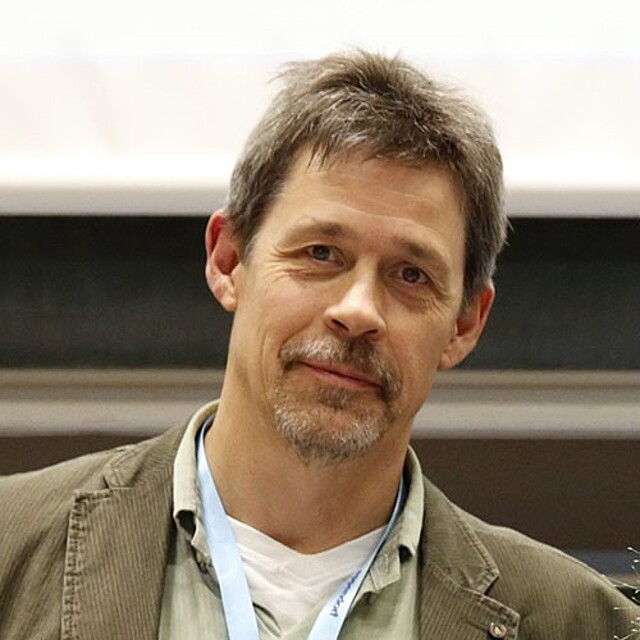
Meet-up with scientist Daniel Besser (BIH/GSCN). Stop by Speaker's Corner and find out how stem cell research is helping to turn research into health.
Hair grows throughout our lives. Wounds heal. Cells in the blood renew themselves every three months. Stem cells, a very special type of cell in our body, are responsible for these miracles: they can divide, multiply, and develop into all different types of body cells throughout our lives.
If errors occur during these fundamental processes, diseases can develop. Therefore, stem cell research provides important insights for medicine.Dr. Daniel Besser explains the consequences of misguided stem cells and how research into diseases can lead to future therapies. These “all-rounders” among cells can do a lot: stem cells are used to grow small pieces of tissue and organoids, so-called “mini-organs,” which are then used to test the effects of drugs, or they may one day be used as replacements for lost tissue.
Stem cell research is exciting! But there is also a great need for discussion: What are untested stem cell therapies? Do we want humans to be able to be created from skin stem cells one day? And is that even conceivable?
Organized in cooperation with GSCN
Date: November 1, 2025
Time: 3:00 - 3:30 pm
Location: Museum für Naturkunde Berlin, Invalidenstr., 10117 Berlin
Nov 4, 6:00 pm | Workshop: "One Cell at a Time: Measuring The Building Blocks of our Bodies"

© Wilkinson and Marcus | National Cancer Institute Discover how cutting-edge biomedical research reveals the secrets of health, disease, and the future of personalized medicine.
Did you ever wonder how our body develops from a single cell? Or how our cells can turn into cancer cells? Our event takes you inside the fascinating world of single cell research, where scientists study life one cell at a time to uncover how our bodies form, stay healthy, and sometimes fall ill.
We begin with an introduction to single cell technologies. Researchers will share insights into how organs and tissues form, how our blood and immune system develop, how mutations can trigger disease, and how we can make our immune system fight cancer. Along the way, you will see how machine learning and data science help us make sense of millions of measurements.
After the talk, small guided lab tours offer an up-close look at how these discoveries are made. You will be able to try simple experiments yourself - pipetting, visualizing cells, and even counting them. You can also follow live demonstrations of advanced laboratory equipment and explore real-world sequencing data to see how we turn raw measurements into meaningful discoveries.
Throughout the event, our researchers will be available to answer all your questions. Together, we invite you to imagine a future beyond now - where understanding single cells opens new possibilities for predicting, preventing, and treating disease.
Organized in cooperation with MDC-BIMSB
Date: November 4, 2025
Time: 6:00 - 7:30 pm
Location: Berlin Institute for Medical Systems Biology of the Max Delbrück Center (MDC-BIMSB), Hannoversche Str. 28, 10115 BerlinNov 5, 3:00 pm | "Berlin Diversithon"
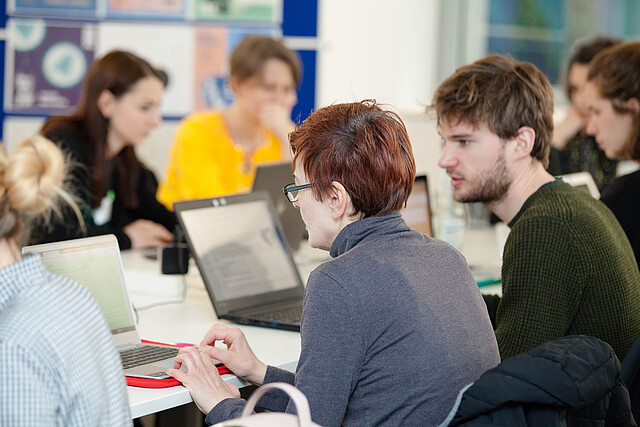
Join us to create and edit Wikipedia articles together with experienced members of the WomenEdit Group Berlin to make Wikipedia more diverse! No experience necessary.
We all use Wikipedia as a source to find information and learn more about certain people. But did you know, that less than 20% of all English articles on Wikipedia are about women and the number for women scientists is even smaller?
With the BIH Diversithon we want to change this and contribute to a more diverse Wikipedia. Join us for our Edit-a-thon to edit and create new Wikipedia articles about women scientists. This time we want to connect our Edit-a-thon with the project "Versäumte Bilder" (missed pictures) . In this project we want to create AI-generated images of female Charité scientists to give them the visibility they deserve. But we do not only want to create portraits, but also inform the public about the incredible work of these women. That's why we invite you to join our Edit-a-thon to write or improve the Wikipedia entries of these women as well.
Everyone is welcome to participate, you do not need any knowledge about editing or writing Wikipedia articles. All you need is some time and a notebook.
Experienced members of the WomenEdit group Berlin will give an introduction and support you to take your first steps or dive deeper into editing Wikipedia entries.
Organized by BIH
Date: November 5, 2025
Time: 3:00 - 6:00 pm
Location: Rahel-Hirsch-Center for Translational Medicine, Luisenstr. 65, 10115 BerlinNov 6, 6:00 pm | Workshop: "One Cell at a Time: Measuring The Building Blocks of our Bodies"
© Wilkinson and Marcus | National Cancer Institute Discover how cutting-edge biomedical research reveals the secrets of health, disease, and the future of personalized medicine.
Did you ever wonder how our body develops from a single cell? Or how our cells can turn into cancer cells? Our event takes you inside the fascinating world of single cell research, where scientists study life one cell at a time to uncover how our bodies form, stay healthy, and sometimes fall ill.
We begin with an introduction to single cell technologies. Researchers will share insights into how organs and tissues form, how our blood and immune system develop, how mutations can trigger disease, and how we can make our immune system fight cancer. Along the way, you will see how machine learning and data science help us make sense of millions of measurements.
After the talk, small guided lab tours offer an up-close look at how these discoveries are made. You will be able to try simple experiments yourself - pipetting, visualizing cells, and even counting them. You can also follow live demonstrations of advanced laboratory equipment and explore real-world sequencing data to see how we turn raw measurements into meaningful discoveries.
Throughout the event, our researchers will be available to answer all your questions. Together, we invite you to imagine a future beyond now - where understanding single cells opens new possibilities for predicting, preventing, and treating disease.
Organized in cooperation with MDC-BIMSB
Datum: November 6, 2025
Time: 6:00 - 7:30 pm
Location: Berlin Institute for Medical Systems Biology of the Max Delbrück Center (MDC-BIMSB), Hannoversche Str. 28, 10115 BerlinNov 7, 2:00 pm | Science Slam "Women in Science – Slam & Stories"
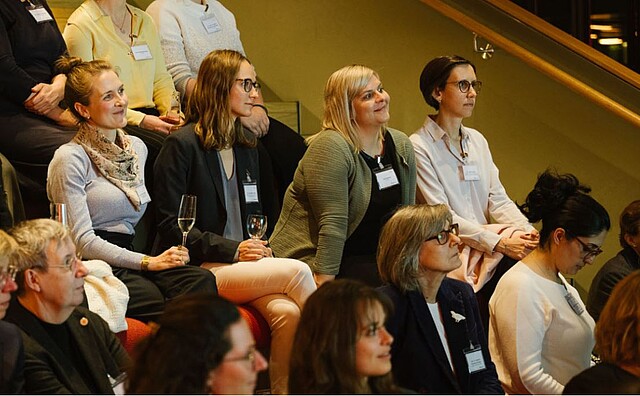
© Berlin Science Week | Phil Dera Zia – Visible Women in Science and Humanities
With the Slam & Stories format, female scientists from previous cohorts of the Zia Fellowship Programcohorts bring their science to the stage. In short, inspiring talks, they share how their scientific work comes about and what questions drive them. These are not dry technical lectures, but exciting findings and personal insights.
Following the short talks, there is room for discussion and questions: What does a career path in science look like? What obstacles and opportunities do young female researchers encounter? Listen to all the exiting topics, presented by the fellows, among them Maria Luise da Costa Zemsch (BIH) with her talk "Wenn Daten halluzinieren: Wie Ketamin das Gehirn im Schnellverfahren umkrempelt".
Organized by Zia - Visible Women in Science and Humanities
Date: November 7, 2025
Time: 2:00 - 4:00 pm
Location: Holzmarkt 25, Holzmarktstr. 25, 10243 BerlinNov 7, 4:30 pm | Oxford Style Debate: "Should We Publish in Academic Journals?"

Join an Oxford-style debate on the future of scholarly publishing. Experts Bernd Pulverer and Alexandra Freeman present their views on traditional vs. innovative models, with audience voting.
The way research is published shapes how knowledge is used, reused and if it is trusted. There is an ongoing debate about the adequacy of the traditional academic publication system and many researchers question whether it still meets their needs. Consequently, new dissemination models are gaining attention. These alternatives are often created and led by the research communities themselves, offering fresh approaches to how scholarly work is shared.
This session will feature an Oxford-style debate between two experts representing different publishing platforms on the future of scholarly publishing. Bernd Pulverer, Head of Scientific Publishing at EMBO Press, will make the case for the ongoing value of traditional academic publishing. EMBO Press is a well-established nonprofit publisher supported by a scholarly institution. Opposing that view, Alexandra Freeman, founder of Octopus, will advocate for fundamentally new forms of scholarly communication. Octopus is a community-driven platform that seeks to move beyond classic journal models. Each speaker will present their position on what researchers today expect from publishing—such as openness, fairness, transparency, and quality—and how different models aim to meet those expectations.
As an audience member, you will actively shape the discussion by voting on the central question both before and after the debate. The session will be moderated by Jessica Rohmann, an epidemiologist and strong advocate for rigorous research practices. Our interactive format will highlight the strengths and weaknesses of each position and the audience will play a role in shaping the future of academic publishing.
Whether you are deeply involved in scholarly publishing or simply curious about how research enters the public domain, this session offers an engaging, participatory look at a system that influences which knowledge is seen, trusted, and used, and ultimately, how the future of science, policy, and innovation is constructed.
Organized by BUA, Einstein Foundation Award & BIH QUEST Center
Date: November 7, 2025
Time: 4:30 - 6:00 pm
Location: Holzmarkt 25, Holzmarktstr. 25, 10243 BerlinNov 7 | Falling Walls Roundtable: "Boosting Biomedical Innovation Ecosystems in Europe"
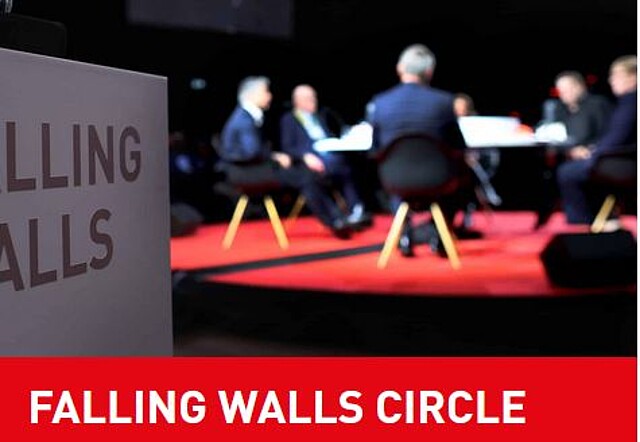
Biomedical ecosystems are the breeding ground for medical breakthroughs, innovative therapies and technology-driven healthcare solutions. Europe is at a turning point–facing the challenge of overcoming regional competition to achieve global competitiveness, closing the multiple gaps between academia and the private sector and building more resilient and sustainable healthcare systems. We will dive into success stories and the remaining barriers that can be overcome with a collaborative approach.
Panelists
Alexander Betts (University of Oxford)
Trine Bartholdy (Bioinnovation Institute)
Alex Mihailidis (University of Toronto)
Christopher Baum (Berlin Institute of Health at Charite)Organized in cooperation with BUA & University of Oxford
Date: November 7, 2025
Time: 11:00 am - 12:00 pm
Location: Falling Walls Science House, Room Franklin, Karl-Marx-Allee 34, 10178 BerlinNov 8 | Falling Walls Roundtable: "Supercharging Healthcare: AI, Data & Infrastructure"
Artificial intelligence (AI) in health research promises disruptive improvements. Europe's AI Gigafactories, the TEF-Health testing facility and Germany's Hightech Agenda are emerging, but are still hindered by the ineffective use of health data. Experts from health research and infrastructures will discuss the need for central high performance computing structures and outline enablers and barriers to a future where AI and data improve health outcomes and strengthen resilience in public health.
Organized in cooperation with Helmholtz Munich
Date: November 8, 2025
Time: 2:00 - 3:00 pm
Location: Falling Walls Science House, Room Ann Jackson, Karl-Marx-Allee 34, 10178 BerlinNov 10, 3:00 pm | Early Career Award 2025 "Meet the Finalists - Live"
Who will take home the €100,000 Einstein Foundation early career award? Meet the finalists pioneering research quality!
Join us to hear from up to six outstanding early career researchers, competitively selected by an international jury from 72 applicants as finalists for the prestigious Einstein Foundation Award for Promoting Quality in Research. Thanks to the generous support of the BIH QUEST Center for Responsible Research, the Early Career Award category provides €100,000 to empower the winner to bring their vision to life.
The event highlights how these visionary approaches can transform how knowledge is generated, shared, and evaluated, ultimately enhancing the integrity and openness of scientific inquiry. After the presentations, the jury will deliberate and select the winner, who will receive €100,000 to bring their idea to fruition.
This event offers a unique opportunity to engage with the next generation of researchers who are shaping the future of science with integrity and creativity.
The Einstein Foundation Award for Promoting Quality in Research honors substantial contributions that strengthen the culture of robust, transparent, and reproducible research across the humanities, social sciences, natural sciences, and life sciences.
By recognizing and incentivizing forward-thinking approaches that enhance the integrity and openness of research processes, the award supports efforts that improve how knowledge is generated, shared, and evaluated across all disciplines. These foundational improvements are essential to enabling sustainable and meaningful responses to the pressing challenges of our time.
Organized by Einstein Foundation Award & BIH QUEST Center
Date: November 10, 2025
Time: 3:00 - 5:00 pm
Location: Online via Zoom


