From Research to Real Life: The BIH at the Berlin Science Week 2026

Science is personal. Under the theme “In Touch,” this year’s Berlin Science Week explored how research connects with people and impacts our daily lives and health. The BIH joined in with more than 14 events at seven venues, together with numerous partners and in a variety of formats. From lab tours and lectures to workshops and interactive installations, the program showed how translational research touches our lives and how discoveries in the lab can ultimately benefit personal health. Here are our highlights!
Review
Four events in one day kicked off the BIH program, exploring diversity, anonymized psychotherapy and the secrets of our cells. Beneath the dome of the Zeiss Planetarium, Milad Rezvani presented impressive visualizations of how liver tissue can be grown from stem cells and what this could mean for regenerative medicine. At the MDC/BIH single-cell unit, visitors got up close with the smallest units of life during the lab tour One Cell at a Time, discovering how single-cell research is changing our understanding of health and disease.
Making science personal also means making its history more diverse. At the BIH Diversithon, 20 participants worked to improve the representation of women scientists on Wikipedia. One immediate result: a new English-language entry on Käthe Beutler, a Jewish paediatrician and pioneering scientist from Berlin, whose life and career the participants explored together.

Review - Part 1
Because science is also about the people behind it. At the event Measure. Understand. Prevent, hosted by the Embassy of Croatia, three researchers from Berlin and Zagreb shared their personal journeys and scientific motivations. Among them was Matej Skrobot vom Julius Wolff Institut (JWI), who presented his work in the EU project Horizon PROTO, investigating how a digital training program can help prevent knee osteoarthritis.

Review - Part 2
Scientific breakthroughs only make a difference when they reach patients. So how can we bring science closer to society and what does it take to open up new therapies where convenient treatments reach their limits? These questions were at the core of a discussion round on Advanced Therapy Medicinal Products (ATMPs), hosted by EURICE. Experts from clinical research, biotechnology and technology transfer, including Alexander Stumpf (SPARK-BIH), discussed the potential of gene and cell therapies, how to overcome regulatory hurdles and how to enhance new therapies while ensuring patient safety.
And what if personal information needs to remain private? Taking this consideration from theory into practice, the BIH AG Health Data Privacy hosted and co-hosted several events on data privacy. Together with their partners at Fraunhofer AISEC and Charité they presented the VERANDA research project and tools for anonymous digital psychotherapy. Visitors could experience anonymized video, audio and text conversations with therapists and even design their own psychotherapy app for vampires in a hands-on workshop!

Review - Part 3
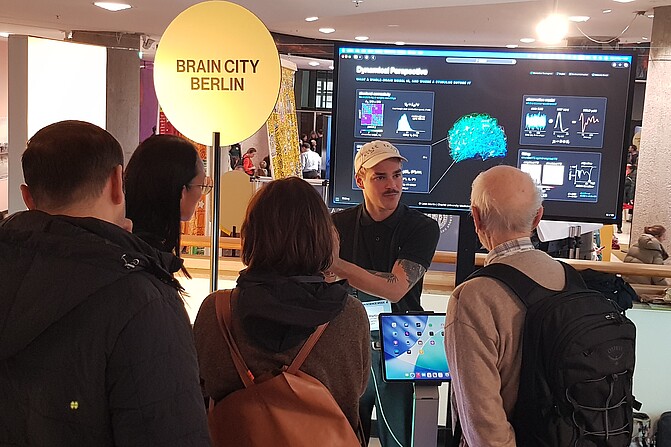
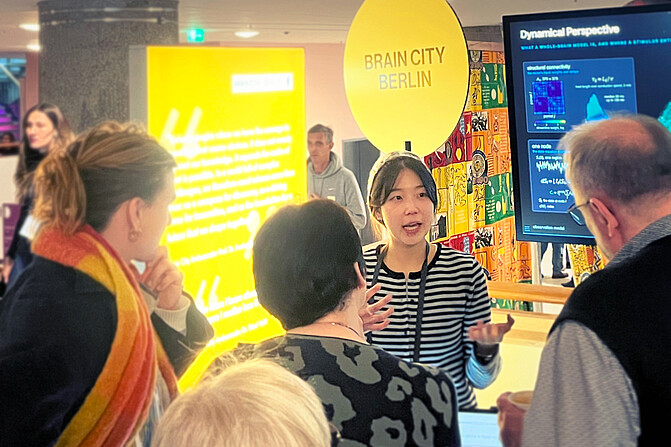
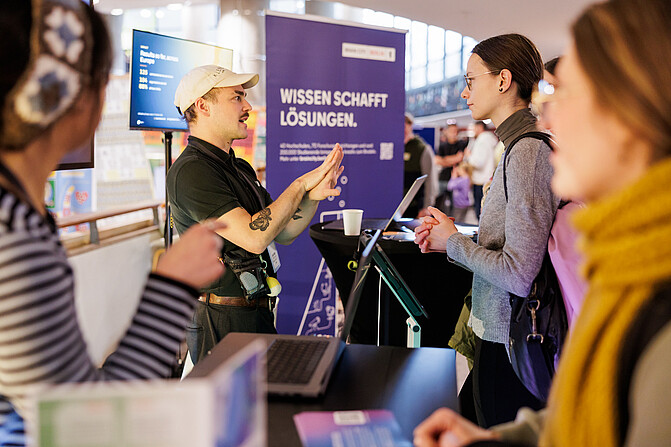
The BIH also brought its translational science right into the heart of the festival center at the HKW. On the Inspiration Stage, early-career researchers Luke Flanagan, Ann-Kathrin Meß, Elisa Moutin, Irene Talon and Schayan Yousefian turned complex research into engaging 12-minute stories. At the Speaker's Corner, Daniel Besser (GSCN) sparked conversations about the future of stem cell research. Meanwhile, at the Brain Simulation Section’s exhibition booth, Leon Martin und Jeehye An introduced interested visitors to the worlds of brain simulation (The Virtual Brain) and EU regulatory and implementation processes (TEF-Health) for trustworthy AI.

Review - Part 4
From connecting science with society to understanding what connects us as human beings: At the Rahel Hirsch Center, an international team including Katy Börner (Indiana University), Manfred Laubichler (Arizona State University), Peter Robinson and Dominik Seelow (BIH) invited visitors on a journey through the human body. Large-scale visualizations set up in a decision theater, offered Multiscale Human Touchpoints which made it possible to explore how organs, tissues, cells and proteins work together to keep us alive.

Review - Part 5
And ultimately, making science personal also means making science better. In an online pitch session, the finalists of the Einstein Foundation Early Career Award 2026 presented their “Bright Ideas for Responsible Research”. Funded by the BIH QUEST Center for Responsible Research, the award recognizes work that advances the quality, transparency and reproducibility of science.
Falling Walls Science Summit
When science moves beyond the lab and into society, new questions arise. At the parallelly held Falling Walls Science Summit, the BIH also addressed issues of public concern in the roundtable „Beyond the Lab: Autonomous Systems in Action“. Petra Ritter (BIH/Charité) joined an international expert round discussing how robots can move from research labs into everyday life and healthcare and why testing infrastructures, like TEF-Health, are essential to ensure they work safely for people.
Making innovation meaningful for people is also about trust. At a second roundtable, „Building Trusted Ecosystems for Biomedical Innovation“, Carina Vorisek and Jens Rittscher (BIH) explored how better data sharing across Europe, supported by infrastructures such as the European Health Data Space (EHDS), can advance biomedical innovation. They highlighted the importance of actively involving patients and healthcare professionals and building their trust.
Berlin Science Week 2026 showed that science is never just about discoveries – it is about people, their health, their stories and their trust. A big thank you to all our colleagues, partners, organizers who made it possible to make this tangible and to our visitors eager to know more. See you next year!
Impressions

© Stefanie Loos | Berlin Science Week 
© Atelier LIMO 




© Ole Spata | Berlin Science Week 
© Ole Spata | Berlin Science Week 
© BIH | Luke Flanagan 
© BIH | Luke Flanagan 
© BIH | Luke Flanagan 
© Ole Spata | Berlin Science Week 
© Ole Spata | Berlin Science Week 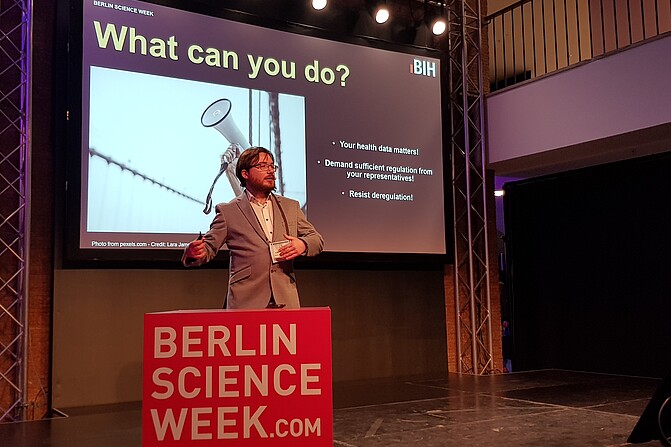
© BIH | Patricia Ebel 
© Ole Spata | Berlin Science Week 
© Ole Spata | Berlin Science Week 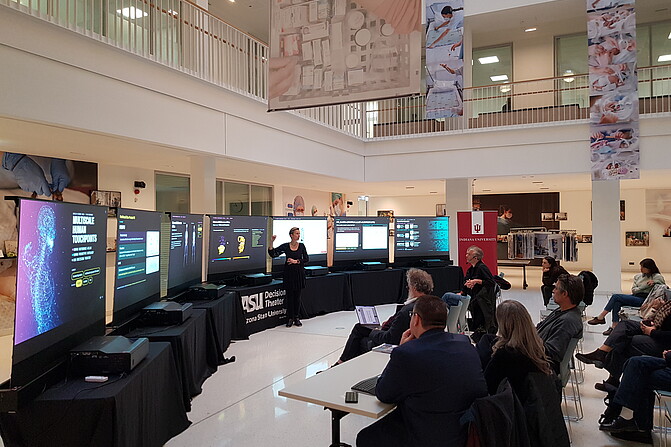
© BIH | Patricia Ebel 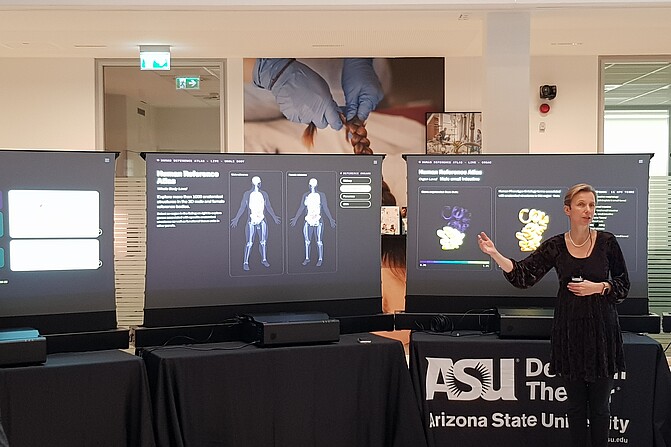
© BIH | Patricia Ebel 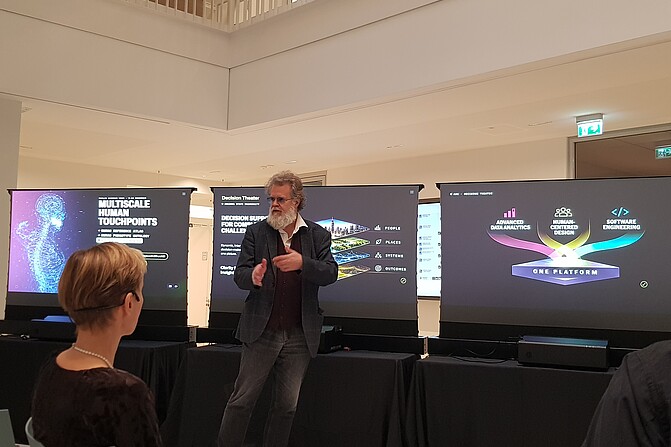
© BIH | Patricia Ebel 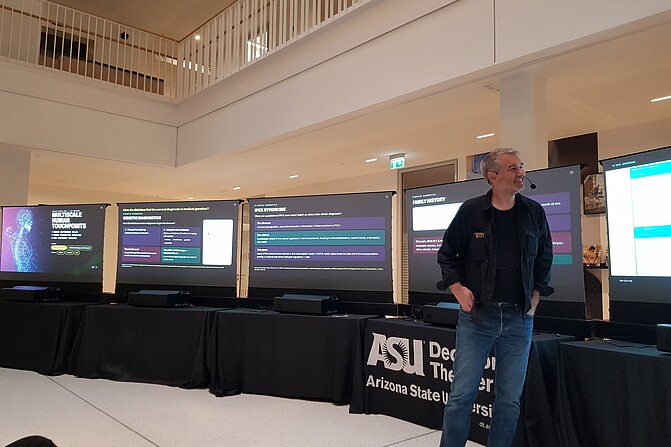
© BIH | Patricia Ebel 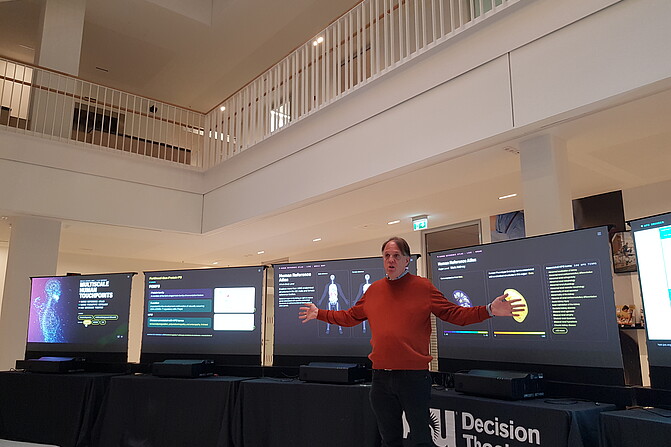
© BIH | Patricia Ebel 
© BIH | Patricia Ebel 
© BIH | Kornelia Johann 
© BIH | Kornelia Johann 
© BIH | Kornelia Johann 
© BIH | Kornelia Johann


Photo Credits
Festival Center | Haus der Kulturen der Welt (KHW)
© Berlin Science Week | Marc Beckmann
© Berlin Science Week | Stefanie Loos
© Berlin Science Week | Ole Spata
© BIH | Luke Flanagan
© BIH | Patricia Ebel
Embassy of Croatia
© Atelier LIMO
EURICE Event
© EURICE
Multiscale Human Touchpoints
© BIH | Patricia Ebel
Falling Walls Science Summit
© BIH | Kornelia Johann